SimpleEngineer's blog
list of notable African agricultural engineers, scientists, and innovators whose contributions have been crucial in transforming the agricultural landscape of the continent, improving food security, and combating hunger. These individuals have introduced innovations and policies that have had a lasting impact on African agriculture, empowering farmers and ensuring sustainable development.
Key African Agricultural Engineers, Scientists, and Innovators1. Akinwumi Adesina (1960–Present) – Nigeria

- Contribution: As President of the African Development Bank and a former Nigerian Minister of Agriculture, Adesina played a crucial role in driving agricultural transformation across Africa, launching initiatives like the Alliance for a Green Revolution in Africa (AGRA).
- Impact: His efforts have promoted the use of modern farming techniques, fertilizers, and agricultural policies, significantly increasing food security across Africa. He received the World Food Prize in 2017.
- Famous Quote: "The future of Africa’s development depends on agriculture, and agriculture depends on youth."

- Contribution: An agricultural scientist and plant breeder, Ejeta developed drought-resistant and pest-resistant sorghum varieties, critical to ensuring food security in sub-Saharan Africa.
- Impact: His work has been instrumental in improving the productivity of sorghum, a staple food in Africa, and his innovations have benefitted millions of smallholder farmers. He was awarded the World Food Prize in 2009.
- Famous Quote: "Science is a powerful tool to defeat hunger and poverty, but it requires dedication and global cooperation."
Notable Asian agricultural engineers, scientists, and innovators who have made remarkable contributions to agricultural development in Asia. Their work has improved food security, introduced new technologies, and empowered smallholder farmers, contributing to the transformation of agriculture across the continent.
Key Asian Agricultural Engineers, Scientists, and Innovators

- Contribution: Known as the "Father of Hybrid Rice," Yuan Longping developed the first high-yielding hybrid rice varieties, which significantly increased rice production and helped alleviate hunger in China and other Asian countries.
- Impact: His innovations in hybrid rice have been adopted worldwide, helping feed billions of people.
- Famous Quote: "To make a greater contribution to mankind, we should not only meet the needs of China but also help feed the world."

- Contribution: Known as the "Father of the Green Revolution" in India, Swaminathan introduced high-yielding varieties of wheat and rice that helped India achieve self-sufficiency in food production during the 1960s and 70s.
- Impact: His work prevented famines in India and significantly improved the country’s food security.
- Famous Quote: "If agriculture goes wrong, nothing else will have a chance to go right."
3. William Dar (1953–Present) – Philippines
- Contribution: Dar is a leading agricultural scientist and former Secretary of Agriculture in the Philippines. He has been instrumental in promoting sustainable farming practices and crop diversification in Asia.
- Impact: His work at the International Crops Research Institute for the Semi-Arid Tropics (ICRISAT) has improved food security in drought-prone areas through innovations in crop production and soil management.
- Famous Quote: "Agriculture must be resilient, sustainable, and inclusive to tackle the challenges of climate change and food security."

- Contribution: An agricultural economist, Hossain was a champion of rural development and food security in Bangladesh. He worked at the International Rice Research Institute (IRRI) and led efforts to improve rice productivity in Asia.
- Impact: His research helped increase rice yields, reduce hunger, and improve livelihoods for millions of farmers in Asia’s rice-growing regions.
- Famous Quote: "Agricultural research and innovation are the pillars of food security in Asia
The future of agricultural engineering is poised for significant transformation as it integrates more advanced technologies and adapts to global challenges such as climate change, resource scarcity, and population growth. Some key trends and technologies shaping the future of agricultural engineering include:
1. Precision Agriculture- Key Technologies: GPS, drones, and satellite imagery will continue to be integrated with farming equipment to precisely monitor crop conditions, soil moisture levels, and other critical factors. This approach allows for optimized input usage (water, fertilizers, pesticides) and higher crop yields.
- Impact: Precision agriculture can improve efficiency and sustainability by reducing waste and increasing productivity. With AI-powered analytics, farmers can make real-time decisions based on data.
- Future Prospects:
The increasing affordability and accessibility of sensors and AI tools
will make precision agriculture more widespread across both large-scale
and smallholder farms
.
- Key Technologies: Autonomous tractors, harvesters, and weeding robots are becoming more common. These machines reduce labor costs and increase productivity, particularly in regions facing labor shortages.
- Impact: Automated equipment can work around the clock, which is especially important for time-sensitive farming operations such as planting and harvesting. Robots can also perform tasks such as weeding or fruit picking, which traditionally require manual labor.
- Future Prospects: As robots become more sophisticated, they will handle even more complex agricultural tasks, such as precision planting and selective harvesting.
1. Agricultural Engineer
- Roles: Design and develop farming machinery, equipment, and tools; implement irrigation and drainage systems.
- Key Skills and Tools:
- Mechanical Design: Use of CAD software like AutoCAD, SolidWorks, and CATIA for designing machinery.
- Fluid Mechanics & Hydraulics: Understanding hydraulic systems and pumps for irrigation and drainage.
- Structural Engineering: Designing farm structures using tools like Revit for drafting and structural analysis.
- Environmental Impact Assessment: Familiarity with environmental analysis tools like COMSOL Multiphysics.
- Roles: Design efficient irrigation systems, analyze soil and weather data, and manage water resources.
- Key Skills and Tools:
- GIS and Mapping Software: Use ArcGIS, QGIS, or AutoCAD Civil 3D for designing water distribution systems.
- Hydrology: Knowledge of hydrologic models and tools like HEC-RAS for flood and water flow simulation.
- Soil Moisture Sensors: Familiarity with installing and interpreting data from soil sensors (e.g., TDR and Capacitance Probes).
- Water Management: Knowledge of Evapotranspiration (ET) rates and irrigation scheduling software like CropManage.
.jpg) Engineering
is often viewed through the lens of technical expertise — blueprints,
calculations, and problem-solving mechanics. Yet, for those of us who
wear the title of “engineer,” the role extends far beyond mere equations
and schematic designs. It’s an identity shaped by curiosity,
creativity, responsibility, and the desire to make the world work just a
little bit better than before. I am simply the engineer, a builder of
systems and solutions, but also a contributor to the social fabric and
the unseen forces that keep society moving.The Heart of Problem Solving
Engineering
is often viewed through the lens of technical expertise — blueprints,
calculations, and problem-solving mechanics. Yet, for those of us who
wear the title of “engineer,” the role extends far beyond mere equations
and schematic designs. It’s an identity shaped by curiosity,
creativity, responsibility, and the desire to make the world work just a
little bit better than before. I am simply the engineer, a builder of
systems and solutions, but also a contributor to the social fabric and
the unseen forces that keep society moving.The Heart of Problem Solving
Read More
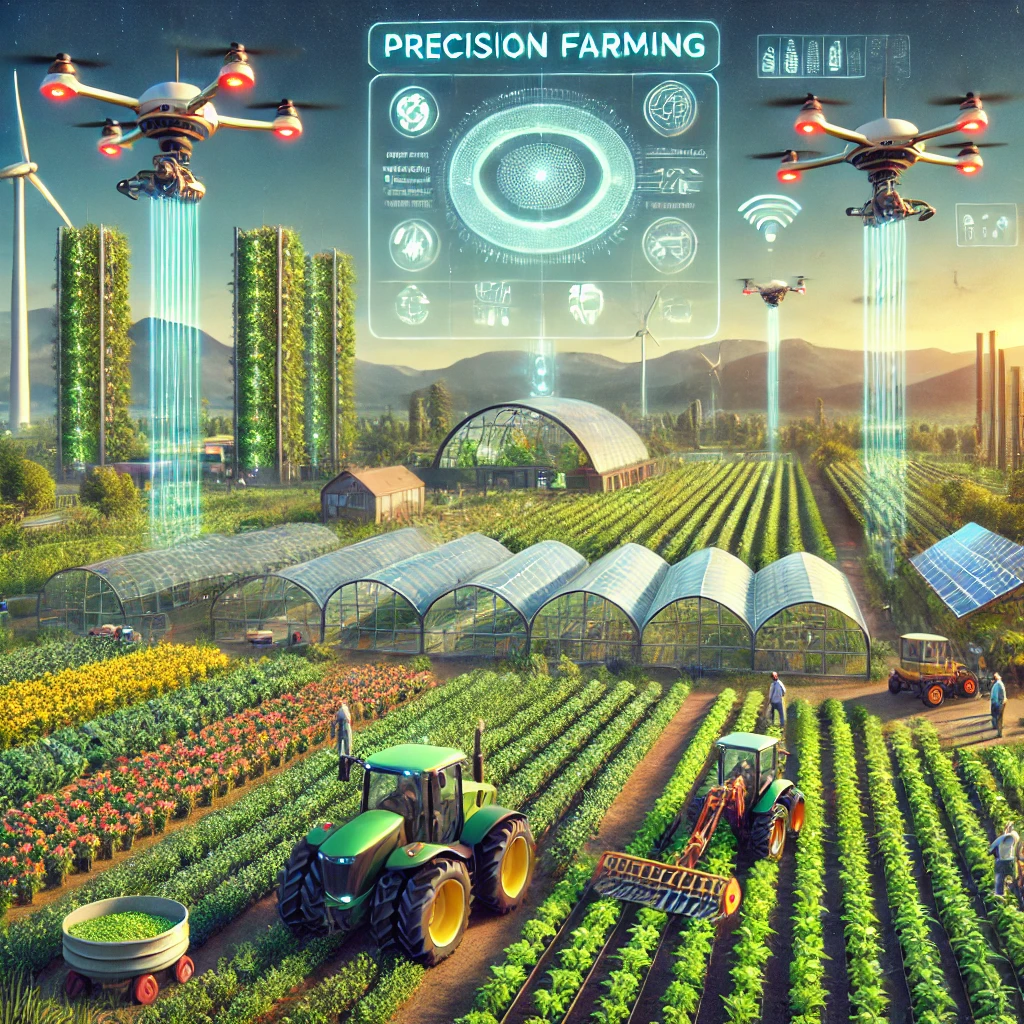
Agriculture, once solely dependent on nature’s rhythms, is facing unprecedented challenges in the modern era. Climate change has introduced irregular weather patterns, making farming increasingly unpredictable and riskier. With the global population on the rise, food security is more important than ever, and it has become clear that the agricultural sector can no longer rely on favourable climates alone to feed the world. To address this, there is an urgent need for countries to integrate engineering and technology into farming practices. This combination is not just a luxury, but a necessity, as no one can expect that climate will always favour the farmers.
The three main types of Virtual Reality (VR) are:
Non-Immersive VR.
Semi-Immersive VR
Fully Immersive VR
know more about them here
In my experience most important aspect of making decision in product engineering is to ask your self 4 questions.
0.is this feasible to do this things now by time,resources, money and priority?
1.by doing this am I making this product useful and usable and adaptable? 2.by doing this am I making this product efficient, secure and scale-able? 3.by doing this am I making this product more maintainable, repairable and manageable/distribute-able?
this are the answers of the questions in order you need to think from 0 to 3.
If 0 is positive then you need to move forward to following
read them here
Social engineering refers to the manipulation of individuals or groups to gain unauthorized access to sensitive information, systems, or physical spaces. Unlike traditional hacking methods that target technical vulnerabilities, social engineering exploits human psychology and behavior to deceive or manipulate people into revealing confidential information, providing access to restricted areas, or performing actions that compromise security. Social engineering techniques can be used for malicious purposes, such as identity theft, fraud, espionage, or cyberattacks, and they often involve psychological manipulation, persuasion, deception, and social interactions. Here are key aspects of social engineering:
To know more details follow the below link
Social EngineeringPrinting Engineering might be your perfect match!
It’s not just about ink and paper — it’s about technology, automation, design, and high-speed production.
From packaging to publishing and even 3D printing, this field plays a vital role in the modern world.
Learn about its scope, the latest tools, career options, and why it’s a hidden gem among engineering fields.
Read More



